Launches
September’s Best Beauty Launches

September’s launches point to an interesting shift within beauty, with brands increasingly looking beyond traditional product categories to solve familiar problems in new and innovative ways. From a sunscreen built around a next-generation UV filter to a dry shampoo inspired by micellar skincare, this month’s most interesting launches aren’t necessarily about entirely new ingredients — they’re about new technologies, delivery systems and approaches to familiar products.
Here are five launches that really stood out to me this month…
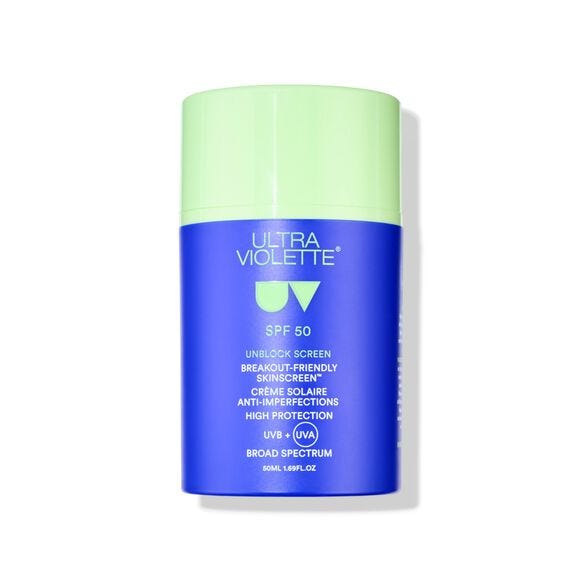
Ultra Violette Unblock Screen SPF 50 Breakout-Proof Skinscreen™
Ultra Violette has built its reputation around making sunscreen more wearable, but Unblock Screen takes a particularly interesting approach to the problem of for oily and breakout-prone skin.
The formula combines zinc oxide with bemotrizinol (BEMT), which is a newly permitted UV filter in the US. This next-gen filter provides long-lasting, broad-spectrum protection while allowing formulators more flexibility with common sunscreen issues like white cast, heavy coverage and limited photostability. This formula also contains Bix’Activ® to help control excess oil and visibly blur enlarged pores, while the soft-matte formula delivers lightweight coverage with a subtle tint to actively prevent white cast.
What really makes this launch stand out, however, is the combination of next-generation UV technology and a formula designed specifically around serving the needs of acne-prone skin. Rather than treating SPF as something that sits on top of a skincare routine, Ultra Violette is directly addressing some of the reasons people with oily or reactive skin often struggle to find a sunscreen they actually want to wear every day.
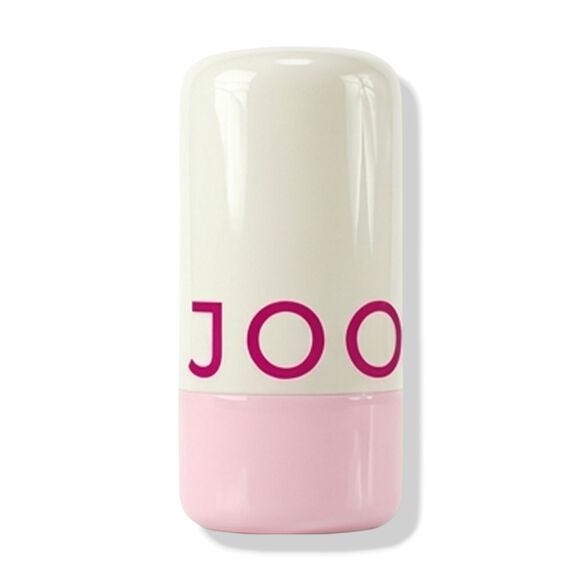
Joonbyrd Mood Jellies
Solid fragrance isn’t anything new, but Joonbyrd’s Mood Jellies take the format in a much more unexpected direction by combining fragrance, neuroscience and skincare in a single product.
The collection launched with three fragrances — Peace, Confidence and Bliss — each designed around a different emotional state. Joonbyrd says the fragrances were developed using insights from neuroscience research, including fMRI, EEG and physiological monitoring, to explore how different scent profiles can influence areas of the brain associated with emotional wellbeing.
The formula itself is also more than just a fragrance. Each jelly contains biotech bacillus ferment, which the brand says helps reduce cellular skin stress, while the water-based jelly format is designed to be applied directly to pulse points for a more intimate and portable fragrance experience. It’s an interesting evolution of functional fragrance: rather than simply choosing a scent based on how you want to smell, Joonbyrd is positioning fragrance around how you want to feel.
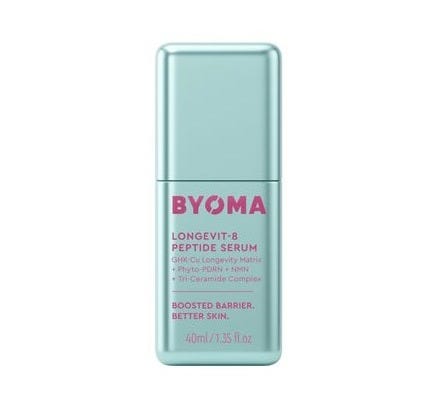
Byoma Longevit-8 Peptide Serum
“Skin longevity” has quickly become one of the biggest emerging themes in skincare, but Byoma’s new Longevit-8 serum is interesting because it attempts to translate that concept into a multi-pathway formulation, rather than a single hero ingredient.
At the centre of this formula is Byoma’s GHK-Cu Longevity Matrix, which combines , and . Alongside this is vegan Phyto-PDRN, NMN (nicotinamide mononucleotide) and a trio of ceramides to support the skin barrier. The brand says the formulation was developed after testing nine different peptide combinations, with the final formula specifically designed to target eight markers of skin longevity including hydration, firmness, elasticity, texture and visible signs of ageing.
The individual ingredients aren’t particularly new. What’s more interesting is how Byoma has combined them into a single “pre-juvenation” formula designed around maintaining skin function rather than simply correcting visible ageing. And, at £21.99 for 40ml, it’s also bringing a fairly sophisticated longevity formulation to a much more accessible price point.
Living Proof Perfect Hair Day Sheer Clean Dry Shampoo Mist
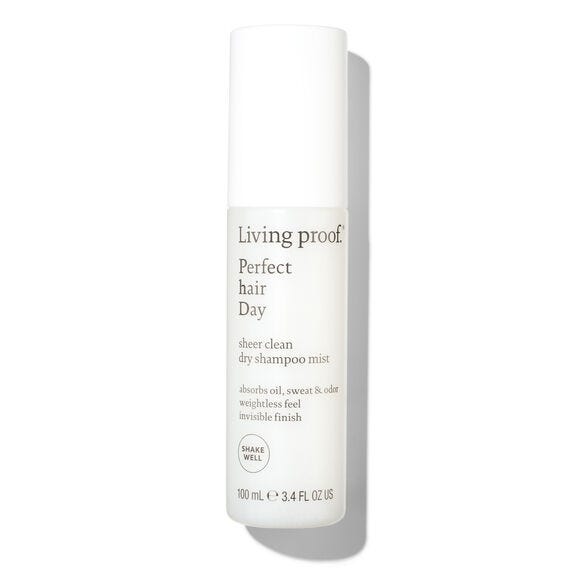
Dry shampoo is a category that hasn’t changed dramatically in years, with functional oil absorption usually coming with some degree of powdery residue. But, Living Proof is challenging that entire format with its first non-aerosol dry shampoo, using technology borrowed from micellar skincare.
The standout feature is its patent-pending Micellar Bi-phase Cleansing System, designed to loosen and absorb oil while leaving hair feeling genuinely clean and weightless rather than “coated”. This is combined with a Micro-suspending Network (to help distribute the formula evenly) and a bioadaptive superfruit to help maintain optimal scalp moisture levels and comfort.
The technical development behind this product is also notable. Living Proof says it carried out 884 performance tests, 314 experiments and 146 prototypes while developing the product, including testing more than 30 different pump options. For me, this is a good example of where beauty innovation becomes genuinely interesting. The actual innovation isn’t another new dry-shampoo powder, but rethinking how dry shampoo actually cleans hair and how it is delivered.
The Ordinary Lacto-PDRN* 4% + B9 Eye Cream
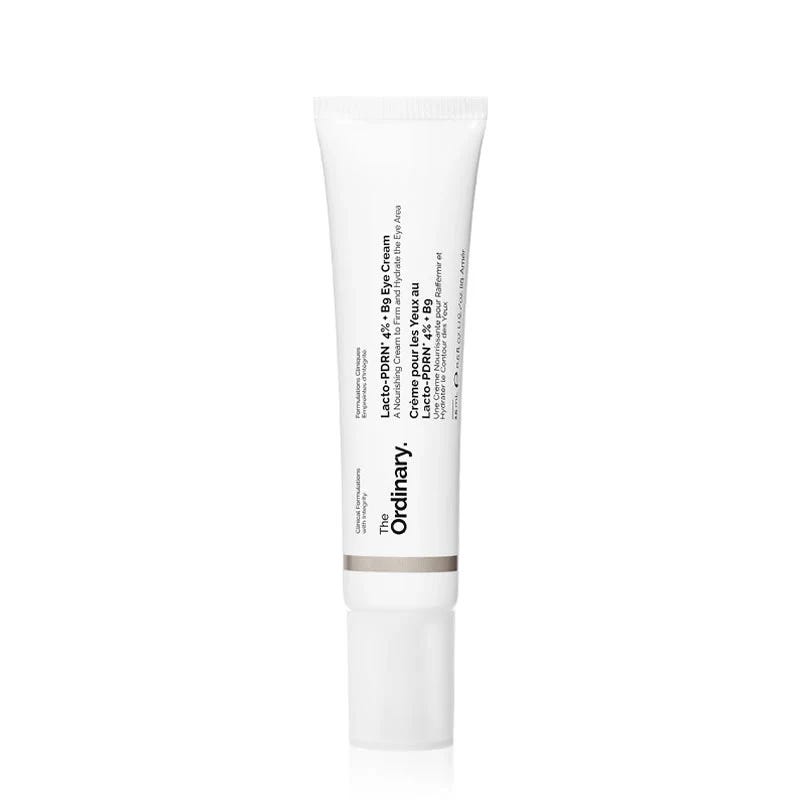
has undoubtedly been one of the biggest skincare trends of the past year, but The Ordinary’s new eye cream is interesting for a slightly different reason. It utilises Lacto-PDRN, a vegan and microbe-derived alternative to the salmon-derived PDRN.
The formula combines 4% Lacto-PDRN with vitamin B9 (folic acid), alongside film-forming technology designed to create an immediate tightening and smoothing effect around the eyes. This gives the product a two-stage approach: an instant cosmetic effect from the film-formers, alongside longer-term treatment benefits. It’s also The Ordinary’s first dedicated eye cream and, at £8.70 for 15ml, it’s bringing one of beauty’s most talked-about emerging technologies into the brand’s typically accessible price territory.
Of course, the use of PDRN itself isn’t new, and (as per my recent PDRN article) topical PDRN is still an area where I’d distinguish carefully between the evidence around the ingredient and evidence for a finished cosmetic formulation. But using a vegan, biotechnology-derived alternative and combining it with a separate film-forming technology for an immediate result makes this one of the more interesting PDRN launches I’ve seen this year.
And, of course, I couldn’t finish this round-up without highlighting another product launch — but for a very different reason…
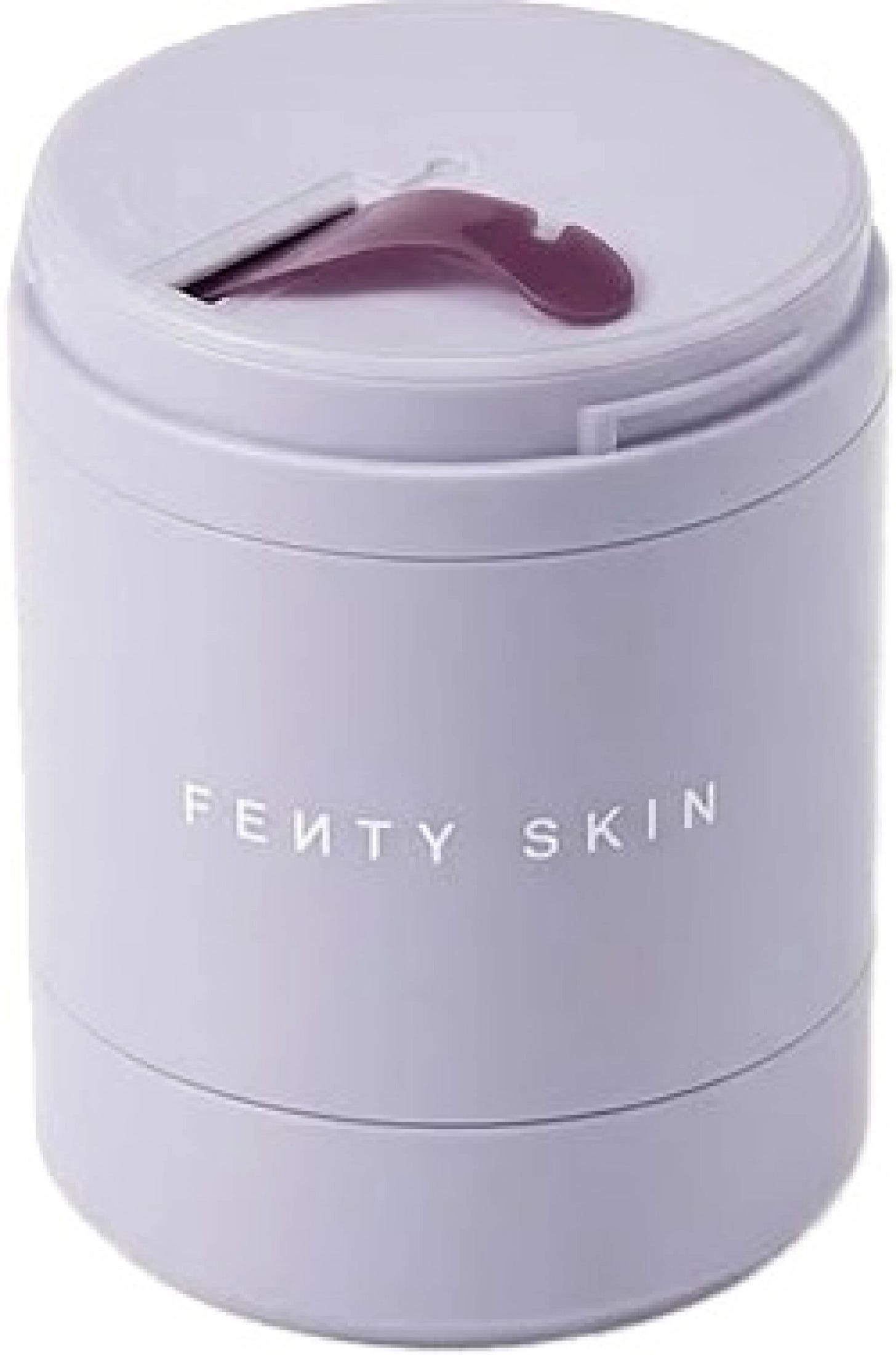
Fenty Skin Dew N Plump Fresh-Sliced Hydrogel Eye Patches
I’m mentioning this product specifically because of what happened surrounding its launch, and how this offers a fascinating glimpse into how beauty innovation actually works behind the scenes.
This month, Fenty Skin announced its hydrogel eye patches which are due to launch in November. The format immediately stood out: rather than pre-cut patches that are saturated in formula and stored in a jar, the hydrogel itself is already infused with the active ingredients and is dispensed as a freshly-cut patch from a cylindrical applicator, which slices off a new piece with each twist.
Impressive, right? Except it turns out Fenty wasn’t alone in this “innovation”. In fact, Glow Recipe and Huda Beauty announced almost-identical products within days of each other, while Korean brand Wonder Bath had already launched the sliced eye-patch format back in July. Huda Kattan subsequently commented that the three brands had been misled by the same packaging supplier over exclusivity. And that’s why I’m highlighting these products.
They serve as a very useful reminder that what can appear as brand-led innovation can actually originate much further upstream, with packaging suppliers and manufacturers serving multiple brands. It also raises an interesting question about what we really mean when we call something “innovative”. A format can be genuinely new to a category, but if multiple brands can access the same technology at the same time, how much of that innovation actually belongs to the brand? For consumers, it also shows how the polished “breakthrough” story we’re served can often be only the final chapter of a much bigger, interconnected supply chain.